


Table of Contents
The short answer is yes, garden rooms should stay popular into 2026, though buyers are more discerning. With about 28% of people working hybrid in early 2025, a warm, quiet, year-round space still makes sense, with any extra living space living at home always of use.
Rules under England’s permitted development (PD) rights still make many builds straightforward, so long as you respect heights, footprint and usage. Rising build costs are a watch-out, so lock specifications early and prioritise fabric performance over frills.
A Reflection of Modern Living
Since 2020, the UK has normalised hybrid working; that’s a durable base of demand for quiet, heated, acoustically sensible spaces separate from the main home, offices, studios, therapy rooms or micro-gyms. Expect this to keep bespoke garden rooms high on wish-lists into 2026.
Beyond work, many owners use the room for relaxation and leisure, a quiet retreat, even a small sanctuary or everyday escape a few steps from home.
What Is a Bespoke Garden Room?
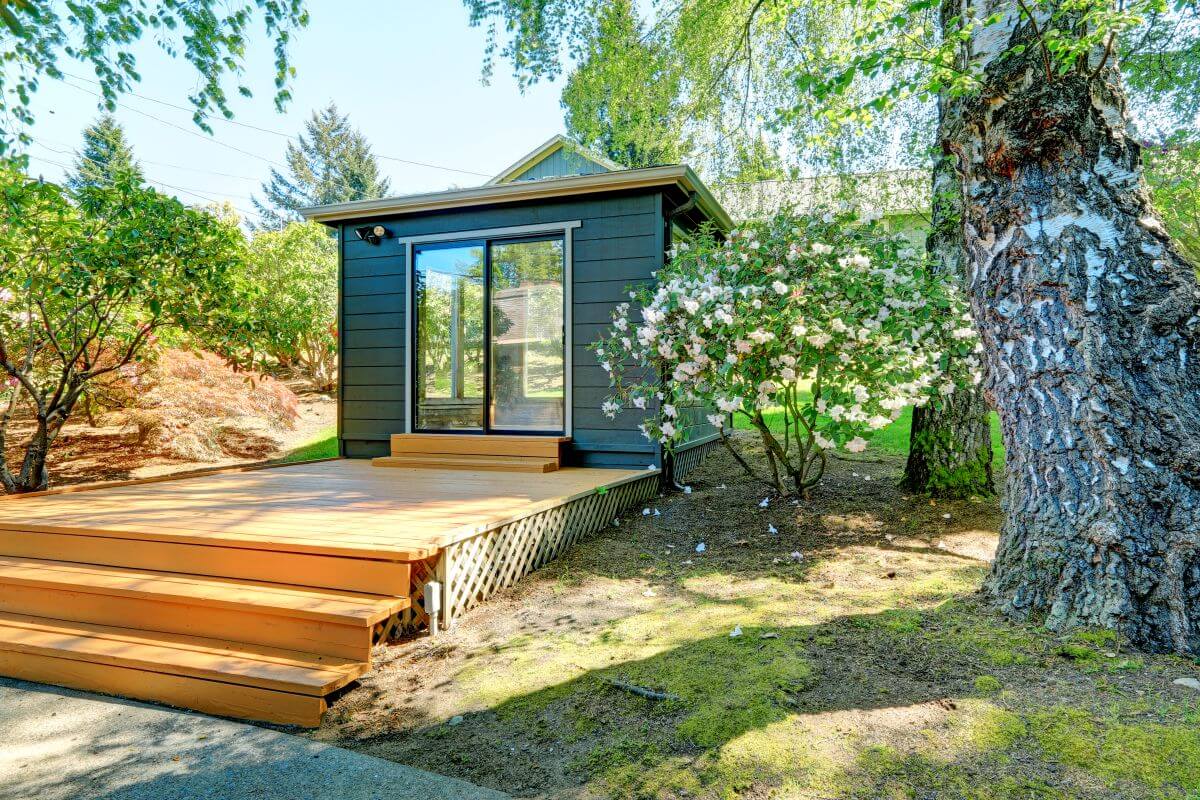
A bespoke garden room is a detached, single-storey outbuilding designed and built to your plot and brief, not to a fixed kit size. It’s specified from first principles (structure, insulation, glazing, services and finishes) so it works year-round and remains incidental to the dwelling (e.g., office, studio, gym), rather than a self-contained home. (For planning context, “incidental” use matters, see Rules at a Glance).
Because it’s a bespoke design, you can treat garden buildings as a practical extension of your living space: place windows for morning sunlight, specify high-performance insulation, and choose durable construction details that suit how you live.
What it usually includes
- Design to order: custom plan, elevations, window/door sizes and positions, roof form.
- Structure: timber frame or SIPs, with structural calculations where required.
- Envelope: insulated floor/walls/roof, airtightness detailing, EPDM (or equivalent) roof covering, cladding (timber/composite/render), double/low-E glazing.
- Services: first-fix and second-fix electrics (to BS 7671/Part P), heating (e.g., panel, underfloor, air-con), basic data cabling; documented sign-off.
- Groundworks: appropriate base (ground screws, pads or slab), safe service routes, thresholds and drainage around the perimeter.
- Handover pack: photos, product list, warranties, maintenance schedule and any compliance certificates.
What it is not
- Not a flat-pack shed, summer house or fixed-size kit with only cosmetic options.
- Not a self-contained annexe/secondary dwelling (sleeping, kitchen, bathroom as a home use will usually push you into full Building Regulations and often planning).
- Not guaranteed to add value in every market, so execution and location matter.
What “Bespoke” Really Buys You
- Fit to plot: dimensions, glazing positions, doors and roof form tuned to sun, overlooking and boundary rules.
- Future-proofing: internal layouts that can shift from office to hobby to treatment room without rebuilding.
- Material control: cladding, floor build-up and roof coverings chosen for lifespan and maintenance, not just looks.

Rules at a Glance (England)
Permitted development (PD) – Class E, Part 1 (GPDO): many outbuildings are PD if they’re incidental to the dwelling (not self-contained living), not forward of the principal elevation and respect height/coverage limits:
- Single-storey; max eaves 2.5 m; max overall height 4 m (dual-pitch) or 3 m (other).
- Within 2 m of a boundary: the entire building must not exceed 2.5 m in height.
- Outbuildings plus extensions must not cover more than 50% of the curtilage of the “original house”.
Always check designated land/listed-building limits and local variations; devolved nations (Scotland, Wales, Northern Ireland) have different rules. Start with the Planning Portal’s official guidance and technical PDFs.
Bespoke vs Kit vs Shed vs Annexe (Quick Comparison)
| Type | Design freedom | Year-round comfort | Typical use | Rules snapshot (England) |
|---|---|---|---|---|
| Bespoke garden room | High (dimensions, openings, spec) | High (insulated envelope) | Office/studio/gym | Often PD if Class E limits & incidental use; electrics to Part P; larger/sleeping may trigger Building Control |
| Modular “kit” room | Medium (pre-set modules) | Medium–High (spec-dependent) | Office/hobby | Similar PD context; comfort varies with spec |
| Garden shed/outbuilding | Low | Low (often uninsulated) | Storage/workshop | May be PD; usually not built for year-round occupation |
| Annexe | High | High (to dwelling standard) | Living/sleeping | Typically needs planning & full Building Regulations |
When Building Regulations Apply
- Under 15 m²: Building Regs typically not required for garden offices if there’s no sleeping accommodation.
- 15–30 m²: Usually exempt if at least 1 m from a boundary or built substantially of non-combustible materials; no sleeping accommodation.
- Over 30 m² or including sleeping: Building Control approval is normally required. Any fixed electrics must comply with Part P (use a registered electrician).
Energy & Comfort Targets (if Building Regs apply)
Where Regs are triggered, the limiting fabric values under Part L (2021) are a useful benchmark for designers: approximately Walls 0.26, Roof 0.16, Floor 0.18 W/m²K for new work. Your supplier should provide U-value calculations and a ventilation strategy.
Foundations & Drainage (Quick Guide)
- Ground screws: fast to install, minimal excavation, good for sloping/tree-rooted plots; confirm load calculations and tolerance for point loads.
- Concrete slab/pads: robust and familiar, but slower and higher embodied carbon; include a DPM and set levels carefully for door thresholds.
- Drainage: direct surface water away from the base; consider French drains or ACO channels on heavy soils.
- Services: plan safe routes (power/data) with correct depth/ducting and isolation, coordinate with the electrician early.
Outdoor Integration: Patio, Planting & Atmosphere
A garden room works best when it feels part of your outdoor space. Thoughtful landscaping, a simple patio and layered greenery connect the building to nature and create a calm atmosphere. Add durable furniture and soft decor to make the threshold a zone for coffee, reading or evening wind-downs.
Orient the room to capture sunlight and frame views through the windows; at night, lighting warms the architecture and extends use year-round. Whether your plot is a compact back garden or a larger backyard, a few plants and well-chosen surfaces can make the room feel like a versatile retreat, an everyday sanctuary and a quiet escape just outside the door.
Costs & Lead-Time (Cautious Ranges)
- Typical size-based ranges: ~£13k–£39k for ~12 m² rooms; £21k–£63k for ~24 m², varying with spec and finish.
- Itemised guides: base, roof type, electrics and glazing can swing the budget significantly; request a line-item quote.
- Market pressure: costs have been edging up; fix quotes and lead times early.
Tip: Prioritise fabric (insulation, airtightness, windows) over purely aesthetic upgrades; it protects year-round usability and running costs.
Health, Safety & Legacy Considerations
- Electrics: design and sign-off to Part P and BS 7671 by a competent person; keep completion certificates for resale/insurance.
- Asbestos (existing structures): asbestos was fully banned in 1999; don’t disturb suspect cement panels or roofing during demolition, follow HSE guidance and survey where appropriate.
Do Garden Rooms Add Value?
They can make a listing more competitive, especially with documented year-round usability and tidy evidence packs (photos, certificates). But value-uplift is not guaranteed and is highly local; speak to a RICS surveyor/valuer for advice tied to your postcode.
When a Garden Room Is Not the Best Move
- Shaded, damp plots or tricky access (risk of moisture issues and higher install costs).
- Conservation or Article 4 areas with tighter controls.
- When sleeping accommodation is the real goal—consider an annexe with full Building Control instead.
Buyer-Ready Checklist
- Confirm PD eligibility (heights, footprint, boundary distances, designated land/listed status).
- Decide size and likely use (now + 3 years), then set your insulation/heating targets.
- Ask for U-value calculations and a ventilation plan if Building Regs apply.
- Specify electrics to Part P; book a registered electrician; keep certificates.
- Request an evidence pack at handover: 20–40 geo-tagged photos, materials list, warranties and a maintenance schedule.
FAQs in the UK
Do I need planning permission for a garden room?
Often no in England if it meets PD limits (Class E): single-storey; keep within the height rules; not forward of the principal elevation; incidental use only. Check local designations and always confirm with your LPA.
What size can I build without Building Regulations?
Under 15 m² with no sleeping is usually exempt. 15–30 m² can also be exempt if either 1 m+ from the boundary or built substantially of non-combustible materials, again with no sleeping. Over 30 m² or any sleeping use typically requires Building Control.
Are garden rooms genuinely year-round?
Yes, if specified well: insulated floor/walls/roof, double/low-E glazing, draught control and a modest heat source. Where Regs apply, use Part L limiting values as a design floor.
How much should I budget?
For quality, insulated rooms: roughly £13k–£39k (≈12 m²) and £21k–£63k (≈24 m²) as a planning baseline; electrics, groundworks, access and custom glazing push costs up.
Can I wire it myself?
Electrical work must meet Part P; notifiable work should be done or certified by a registered electrician, who issues compliance certificates you’ll need for resale/insurance.
Looking Ahead to 2026
Hybrid-work demand, PD flexibility and lifestyle priorities continue to support garden rooms. The winners will be evidence-led (clear compliance and documentation), energy-savvy (decent fabric and ventilation) and sensibly specified (comfort over gimmicks). Budget for potential cost inflation and lock in quotes early.


